Narrative Contagion in Early Childhood Education: Are We Advocating for Change or Rehearsing Defeat?
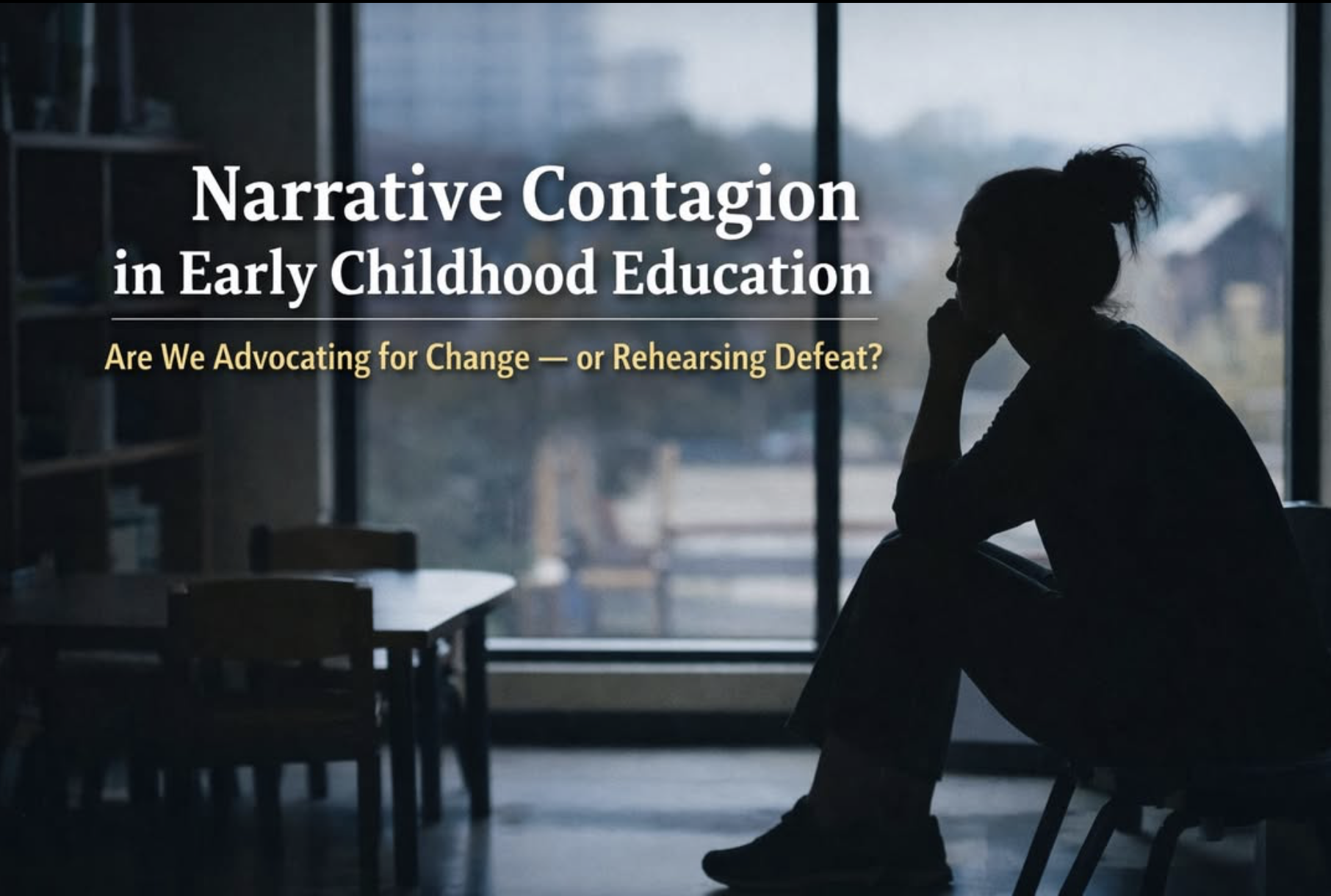
Burnout.
Underpaid.
Undervalued.
Unseen.
Spend a few minutes in online early childhood education spaces and these words appear again and again. They are not exaggerated. Many educators are exhausted. Expectations continue to grow while recognition often struggles to keep pace.
But recently, I found myself asking a different question:
What happens when the stories we tell about our work begin shaping how we experience it?
After more than 30 years in early childhood education, I have learned that professional culture is not only built through policy or leadership decisions. It is also built through narrative — the repeated messages we share with one another about what this work means.
And sometimes, those narratives spread faster than we realize.
When Honest Conversations Become Amplified Narratives
While scrolling through several educator communities this week, I noticed a familiar pattern. One post describing burnout gained significant engagement. Then another appeared. And another.
Each was honest. Each reflected real challenges.
Yet something shifted as the conversation grew. Language intensified. Discouragement multiplied. The emotional tone deepened.
Social platforms reward strong emotional reactions. The more engagement a post receives, the more visible it becomes. Over time, repetition creates momentum.
I call this narrative contagion — when a story spreads through repetition until it begins shaping collective identity.
Contagion does not require negativity or intention. It simply requires repetition.
And when exhaustion becomes the loudest story about a profession, it begins to influence how educators see themselves and their future.
The Hard Seasons Behind Professional Growth
My career has included moments that rarely appear in public conversations.
Children who challenged every strategy I knew.
Families who questioned my decisions.
Days when I sat in my car after work, replaying conversations and wondering if I had handled things differently.
There were seasons when I felt uncertain, overwhelmed, and deeply reflective.
Those experiences were not signs of failure. They were part of becoming an educator.
Looking back, I often think, If I knew then what I know now, I would have been a better educator.
That thought is not regret. It is evidence of growth.
Growth rarely feels comfortable while it is happening. Meaningful work stretches us before it strengthens us.
Struggle does not erase significance.
Advocacy Without Anchoring in Defeat
Advocacy matters.
Educators deserve fair compensation, sustainable workloads, and professional recognition. Naming challenges is necessary for change.
But there is an important distinction between advocating for improvement and anchoring professional identity in hardship.
When the dominant message becomes “this work is nothing but exhaustion,” we risk unintentionally reinforcing powerlessness.
After three decades in the field, I believe two truths can exist together:
This work is hard.
And this work is transformational.
Holding both truths allows advocacy to remain grounded in agency rather than defeat.
Reclaiming Professional Identity
In my work, I often return to three interconnected ideas:
Agency — recognizing we have choices in how we interpret and participate in professional narratives.
Belonging — understanding that each of us contributes to the emotional climate of our field.
Connection — acknowledging that regulation, perspective, and hope spread just as easily as discouragement.
If narratives can spread exhaustion, they can also spread steadiness, reflection, and courage.
What we repeat becomes culture.
And culture shapes how educators lead, collaborate, and remain in the profession.
A Question Worth Asking
What story are we strengthening?
In staff rooms.
In professional conversations.
In online communities.
In how we speak about our work to new educators entering the field.
Is it possible to advocate fiercely for change while still honouring the meaning and impact of early childhood education?
I believe it is.
Because early childhood education is not defined solely by its challenges. It is defined by relationships, growth, and lifelong impact.
That story deserves to be told with equal clarity.
Moving Forward
Perhaps the goal is not to silence difficult conversations, but to balance them.
To recognize struggle without letting it become identity.
To advocate without surrendering agency.
To remember that the narratives we participate in today help shape the profession future educators will inherit tomorrow.
The work is hard.
And it is critical.
We can hold both.