How a Boy, a Book, and a Village Redefined Leadership
Once upon a time, I worked in a centre as a supervisor. This centre had 48 amazing educators spread across four locations. This chapter of my career is the one I value most—because it is where I learned the most.
As you know, I hold a Master’s Degree in Leadership from the University of Guelph. But nothing taught me more than the families, educators, and children I walked alongside during this milestone.
The centre had its challenges—many of them intense, exhausting, and hard to explain. But what I can explain is that this community served two very unique programs.
One was a day program that worked with traumatized youth—some diagnosed, some simply bent, never broken. Alongside it was a transition program designed to prepare these children to enter “typical” classrooms successfully. It moved them from 1:1 support, to small group settings, and eventually into CHAOS—class sizes of 25 or more.
Here’s the part that mattered most: this program was located directly beside our older preschool classroom.
So you can imagine what our youngest learners witnessed—and heard—every day.
Some days brought lockdowns. Some days, children fled the program. Sometimes school property was destroyed. Sometimes it was yelling, swearing, or emotional outbursts.
I know what you’re thinking. This wasn’t good for business. It didn’t feel safe for the little people. And at the time, that was my thinking too.
Trust me—the parents made sure I knew it.
So, like any supervisor would, I went searching for ways to have the program relocated.
I’m saying this with transparency and honesty. And let me be clear—I am not proud of that part of the story.
After exhausting every resource and speaking with what felt like endless entities, I learned that this was not an option. The program would remain.
I am a BIG believer that when Plan A doesn’t work, you move on to Plan B. And to this day, I am so grateful that I did.
On my drive in one day, I was deep in thought, stuck in a loop of “now what?” I felt depleted, defeated, and exhausted. And any good leader knows—that is perfectly normal. It’s okay to feel that way at times. Owning it, and then moving forward with intention, is what matters most.
As I entered the building, another weight settled in: I have to communicate this news to my educators and our families? UGH. How?
And then—boom—it hit me.
If we can’t relocate the program… we embrace it.
After all, the saying holds truth: it takes a village to raise a child… or children.
In that instant, my role shifted. I wasn’t there to protect everyone from discomfort. I was there to lead them through it. To help our village understand that this wasn’t about “those kids” and “our kids.” They were all our kids.
So I called us together.
We talked about possibilities.
This had to be done in unison. It was not a solo mission.
I was so happy when the team followed my lead. I could sense hesitation. Uncertainty. Maybe even fear. But they knew I had them—and more importantly, they knew I believed in them.
And then came the book.
Have You Filled a Bucket Today?
One of the things we had observed over time was that there was one particular child in the transitional program who held incredible influence with his peers. Most days, it wasn’t in a positive way—but they listened to him. They respected him. They almost always followed his lead.
We referred to him as the “ring leader.”
But here is the reframe:
He wasn’t a ring leader.
He was a leader.
He knew how to create followers. He knew how to influence others. What was missing wasn’t power—it was direction. He hadn’t yet learned how to use that leadership for good.
And here is where the story gets a little crazy.
We approached his educators with an idea:
What if he came to read to the younger children?
Hear me out.
He had never made the preschoolers feel afraid. In fact, he often smiled at them. Said hello. We noticed something important—he had soft eyes for the younger children. They weren’t a threat in his world.
That was a powerful observation.
Initially, his educators—three highly specialized professionals—completely shut the idea down. They told me it wasn’t safe. That it wasn’t a good idea.
So we reassured them that if we were to move forward, it would be together. We would create a clear plan of action. Safety would remain non-negotiable.
But the most important part came next.
We asked him.
We asked if he would like to read to the younger children.
He said yes. He wanted to.
But then he added, quietly and honestly, that he couldn’t.
Reading was hard for him. Really hard. He often refused to try, and more often than not, anything connected to reading triggered the very behaviors everyone feared.
So instead of pushing, we offered a different path.
We suggested that he practice.
A win-win for everyone.
We told him that when he felt ready, he could let us know. And then we did something that mattered just as much—we told him how excited we were to have him join us. That the children were excited too.
He called them “the babies.”
And something shifted.
For the first time, reading wasn’t about failure.
It wasn’t about being behind.
It wasn’t about being “less than.”
It became about purpose.
It became about contribution.
It became about belonging.
Just a few weeks later, the announcement came—he was ready.
And he had chosen the book.
Have You Filled a Bucket Today?
A story about kindness.
About compassion.
About paying it forward.
About filling someone else’s heart and, in turn, filling your own.
What a message.
The children were all sitting on the carpet, waiting for their special guest—eager, curious, buzzing with excitement. He had always been kept at a distance, yet he was kind to them. Perhaps they didn’t understand why they couldn’t all be together.
But today, they could.
And you could feel their joy.
After snack and announcements, he walked in—with two specialized educators in tow. We had a plan. Just in case.
Truthfully, the adults were far more tense than anyone else.
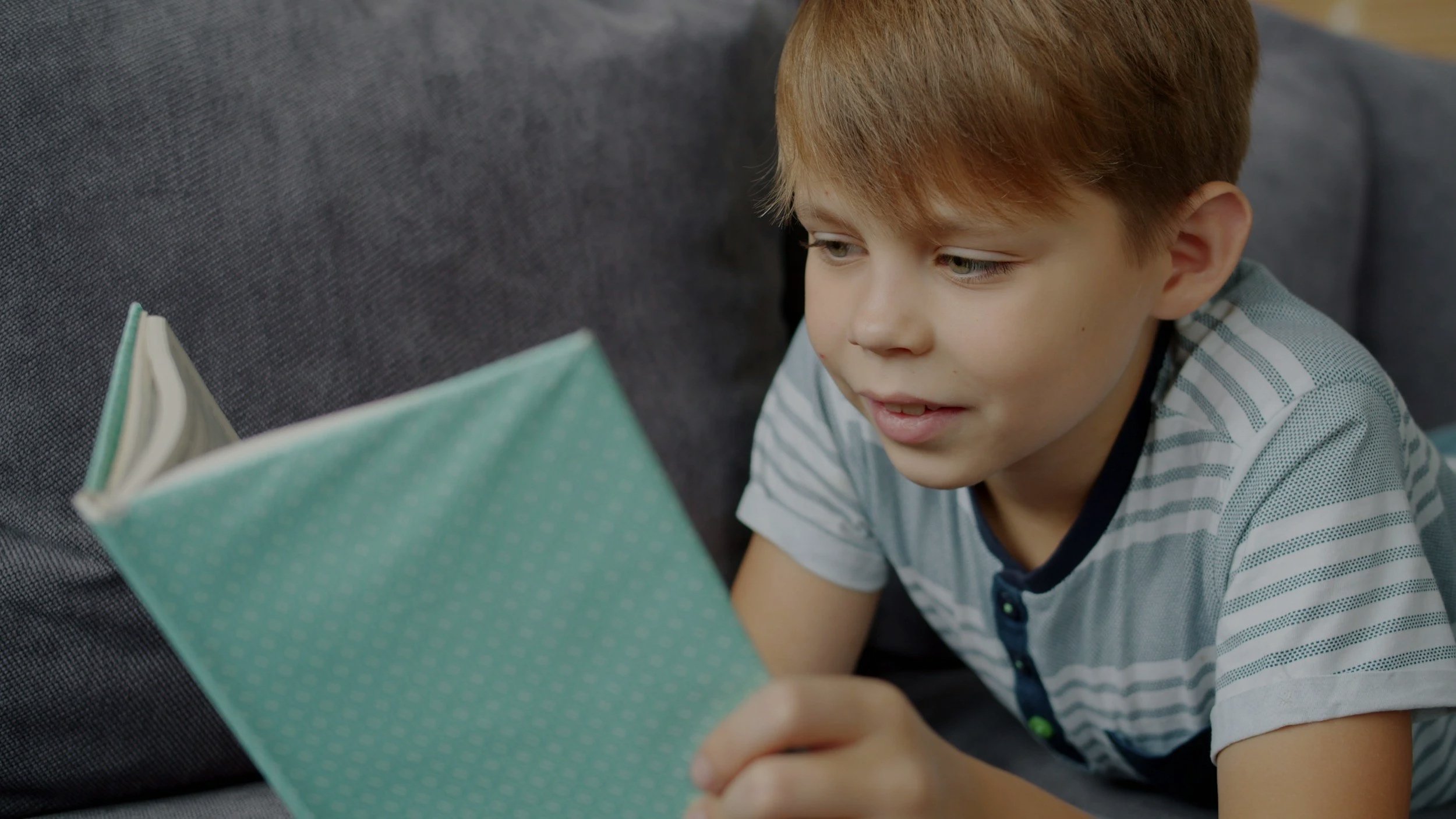
He sat down on a small chair.
Pulled out the book.
And began to read.
The children listened.
They smiled.
They leaned in.
He read the entire book from start to finish.
There were four adults in that room—and not one single dry eye among us.
We had never seen this level of commitment.
This level of confidence.
This level of compassion and joy in him before.
He did it.
In fact, he didn’t just do it—he knocked it out of the park.
That day changed every educator in that room forever.
We saw possibility.
We saw opportunity.
We felt hope.
We celebrated. We talked. And we made a commitment—to keep this going until it was his time to move on.
And we did.
However, the person who moved on… was me.
Soon after this, I was promoted and transferred. It was hard to celebrate. Bittersweet.
I was deeply attached. So proud. So incredibly grateful for my team, our community, and our children. What we had built together had become a true village.
As I shared the news and we prepared for the transition, I received a beautiful letter—from the educators in the transitional program and from my own. It began by reminding me that nothing is impossible. It spoke about the impact and influence I had within the school and the community, and it wished me well, holding the same bittersweet tone I carried in my own heart.
That letter still lives with me.
In fact, it is framed and hanging in my office.
It’s there on the days when leadership feels heavy.
It’s there when doubt creeps in.
It’s there to remind me where I came from, who I serve, and why I do this work.
That frame doesn’t just hold a letter.
It holds a village.
It holds a boy and a book.
It holds a room full of educators who chose bravery.
And on the days when my bucket feels empty, I look at it and remember how full it once made me feel. How that moment filled all of us—educators, children, families, and me. It reminds me that when we pour into others with intention and heart, our own buckets are quietly, beautifully filled too.
This is my new definition of leadership:
Not power.
Not position.
Not control.
Leadership is seeing possibility where others see risk.
It is believing in people before they believe in themselves.
It is choosing compassion over convenience.
It is building villages where every child—and every adult—belongs.
And sometimes…
It begins with a boy,
a book,
and a room full of buckets waiting to be filled.
Nothing is impossible.